
How Many Laser Hair Removal Sessions Do You Really Need?
Introduction
Laser hair removal has emerge as one of the most sought-after cosmetic treatments world wide , and Abu Dhabi is no exception. With its warm climate , strong empassion on culture that values grooming and personal presentation, and a rapidly growing aesthetic health care industry , the prominent demand for permanent laser hair removal in Abu Dhabi has increased dramatically over years. The clinics across the Abu Dhabi offers a diverse variety of laser technologies and customized treatment packages, making the professional hair removal easier than ever to access professional care — but also making it more important than ever for prospective patients to approach the hair removal treatment with accurate information. But however its popularity , many people considering laser hair removal arrive at their first consultation with a fundamental question unanswered: how many sessions will I actually need? The truth is that there isn’t a one sized fits all answer. The honest answer is more nuanced than most clinics communicate upfront, and understanding it properly is the key to making an informed decision about laser hair removal in Abu Dhabi. Understanding these key points before starting your treatment can help set realistic expectations and ensure you make a well-informed decision about laser hair removal in Abu Dhabi.
Why Multiple Sessions Are Always Required
Hair removal could be one-time process if all the hair follicles on the body followed similar cycles of growth, rest, and shedding. Our hair follicles, however, are not always synchronized in their life-cycle
In order for hair to be removed from the entire body, a laser will sooner or later reach each follicle in its growing stage. It is thus vital to have all the appointments attended without any delay . Otherwise, hair follicles that were activated after missing appointments might eventually undergo their growth phase and become dormant again.
Matching the Schedule to Body Part
As hair physiology is varies from every body part it would be impractical to stick to one schedule. The duration of hair growth cycle varies dramatically depending on the region of the body, thus making it necessary for professionals to customize the timing of patient’s visits:
- Face (4 to 6 weeks): Facial hair is particularly dynamic because the growth cycle is short, fast, and greatly controlled by hormones. Sessions should be ordered closer in accordance to coincide with consecutive stages of hair growth.
- Torso, back, and arms (6 to 8 weeks): These are the zones experience moderate rates of growth, which indicates that it is better to fix the appointments with some intervals to ensure that inactive follicles become activated and visible.
- Legs and bikini area (8 to 10 weeks): The lowest rate of growth is observed in these regions; besides, hair spends most time in the resting stage. Extended time between appointments will provide maximum efficiency during every session.
Decoding Your Progress: What Happens Beneath the Skin
Understanding the science of the growth cycle helps shift expectations away from immediate, overnight results toward a gradual, predictable transformation:
- Purge (Weeks 1-3 post-treatment)
After about 10-14 days post-session, the hair follicles begins to lift itself out of the scalp. Although it may seem that there is an abundance of new hair growing, it is merely the process of dead hair shafts lifting off the now defunct follicle.
- Staggered Regrowth (Weeks 4-6)
As the weeks roll by, patchy hair regrowth starts in the treated area. It is vital to remember that this is not a sign of ineffective laser therapy but the biological response. This time, these follicles are waking up from dormancy during your last appointment and entering the fast growth phase again to be addressed during your next appointment.
- Turning Point (Sessions 4-6)
As the middle stage approaches, most of the hair with high pigmentation and thick hair is no longer capable of growth. The residual hair grows thinner, light colored, and very slowly. At this point, daily shaving can be reduced to shaving once every couple of weeks.
- Refinement & Maintenance (Sessions 7 +)
Now that the main course of therapy is finished , most of the follicles have become dormant.The final sessions are dedicated to completely sweeping out late activities and finer hairs. Once the primary course is complete , the majority of the follicles are rendered inactive , leaving the skin texture radically transformed
The Standard Session Range and What Affects It
Most of the patients undergoing laser hair removal in Abu Dhabi demands between six and eight sessions to achieve considerable reduction in hair density. This is a widely accepted clinical range, further individual variation is marked . A number of factors specifically influence the total number of sessions a specific patient will undergoes .
- Hair colour and skin tone: Hair removal treatment is most effective when there is contrast between the dark color of the hair and light skin because of the absorption of laser light by melanin in the hair. Individuals who have thick and dark hairs show better results than individuals who have thin and light-colored hair because their melanin quantity is less, meaning that they need more than one session. Current hair removal equipment, like Nd: YAG laser, is ideal for treating people with different skin tones, making it more appropriate for residents of Abu Dhabi
- Body area: Various body regions have various cycles when it comes to hair growth, thus impacting both the amount of sessions and how far apart sessions should be scheduled. The hair growth around the face especially around the upper lip, chin, and jaw line area is significantly affected by hormonal processes and may require more sessions than other regions. The legs, arms, and back usually respond very well to the regular number of sessions.
- Hormonal conditions: Diseases such as Polycystic Ovary Syndrome (PCOS) cause stimulation for new follicular activity even when treatment is done successfully. Patients suffering from hormonal-related hair growth can therefore anticipate that undergoing regular treatments in the long term will have advantages; this is based on their hormonal conditions rather than a fault in the procedure itself.
- Treatment intervals and compliance: The time between appointments is equally important for success as the appointments themselves. Appointments that are too frequent have the potential of starting treatment too soon while those that are too distant unnecessarily extend the treatment cycle. Facial appointments are generally made every four weeks, and body appointments are made every six to eight weeks. Regular attendance will yield optimal results in the shortest possible time.
- Previous hair removal methods: A patient who has had a history of waxing and threading is likely to notice that the follicles will be weaker than usual, thereby affecting the response. On the other hand, a patient moving on from shaving is going to have an ordinary procedure since the follicles remain unaffected.
What to Expect at Each Session
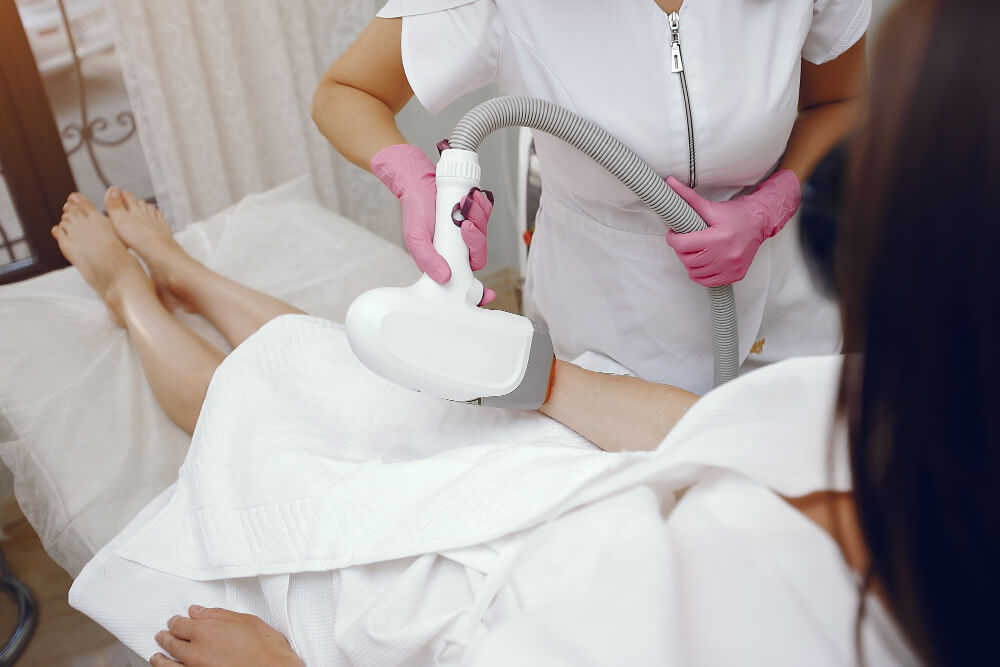
Each session begins with a clinical review of the patient’s skin and hair response since the first appointment, allowing the medical practitioner to adjust laser settings required. The treatment area is thoroughly cleansed and a cooling device or gel is applied for lasting comfort and skin protection. The laser is then passed methodically across the area, delivering controlled pulses that most patients describe as a brief snapping or warming sensation — an experience that becomes milder with each session as hair density reduces over time
Mild redness following hair removal treatment is normal and typically resolves within hours . In Abu Dhabi’s high-UV climate, diligent sun avoidance and sunscreen application in the days after each session are the most essential steps that require some forward planning, particularly for visible areas such as the face and arms to protect from the harshness of the blistering sun
Realistic Outcomes: What Laser Hair Removal Can and Cannot Achieve
The ability to understand what is possible and what is not possible from a procedure like laser hair removal is one of the essential elements that should be considered in the informed consent process. Laser hair reduction has been clinically validated as a procedure capable of producing permanent hair reduction of 70 to 90 percent of hair density. This does not mean that all hairs within the designated area will be completely removed but that there will be a permanent reduction of hair growth in the area treated. This is why regulatory agencies like the FDA in the US use the term “permanent reduction” and not “permanent removal.”
Put simply, the majority of patients who go through the entire process discover that the hair that is left is very fine, very light in colour, and sufficiently sparse to not need much management at all. Patients often comment that the result after undergoing the laser procedure is a life-changing shift towards greater convenience, where shaving is no longer necessary, there are no ingrown hairs because of the waxing process, and the need to pay for hair removal procedures continuously is now gone. For many people living in Abu Dhabi looking to get rid of unwanted hair permanently, going through the entire laser treatment process is truly life-changing.
Also noteworthy is the fact that regular sessions, which may take place once every year to one and a half years, will handle any minor regrowth that might occur during that time, especially in hormonal receptive areas. The regular sessions are usually very short, compared to the initial treatment procedure, and are mainly meant to maintain the desired outcome.
Why Professional Clinic Selection Matters
The differential point between a professional laser hair removal salon from a bad one is not only the result achieved, but also patient safety. Lasers are medical devices, which are meant to operated by professionals who know how to correctly combine laser power, skin color, and hair color. The incorrect operational settings of laser parameters and the operation of old devices inappropriate for certain types of skin can lead to burns, the appearance of spots caused by hyper pigmentation, or even permanent scarring in more severe cases. It should be noted that the danger exists mainly for patients with dark skin pigmentation, for which special lasers (Nd:YAG) are required.
In order for this treatment to have the expected result and be performed safely for you, it is necessary to go to a salon of laser hair removal in Abu Dhabi the staff have strong clinical background and expertise. The equipment will be used and before the procedure, are of high-quality and tested an analysis of your skin will be carried out in advance. Also ensures to pay attention to the packages offered. Some hair removal clinics offering a limited number of procedures as a full cycle of therapy before the assessment of the patient’s condition may prefer to sell rather than conduct a proper diagnosis.
Conclusion
Hair removal treatments in Abu Dhabi can be the perfect way to get rid of excess hair permanently for most eligible patients. Realistic expectations of having to undergo multiple sessions of laser hair removal, each of which will be different in frequency and duration depending on hair and skin types, body area, and hormones, are a prerequisite to satisfaction from this procedure. Patients usually have fantastic results in six to eight sessions when done properly by professionals with appropriate equipment.
With the use of state-of-the-art lasers and medical competence, Bioclinic guarantees you a professional hair removal procedure in Abu Dhabi. Being committed to providing each client with a customized treatment plan based on their particular case and being completely transparent about the number of sessions needed is one of the standards Bioclinic adheres to. Schedule a consultation today at www.bioclinic.ae.

Author